Whitepaper - Validation of cleaning processes for medical devices
Validation of the cleaning of an instrument type in accordance with MDR requirements
The validation of cleaning processes is a central component of the conformity assessment of medical devices in accordance with the Medical Device Regulation (MDR). A structured testing approach is chosen for cleaning validation, which meets the requirements for MDR-compliant cleaning and enables a reproducible evaluation of the cleaning success.
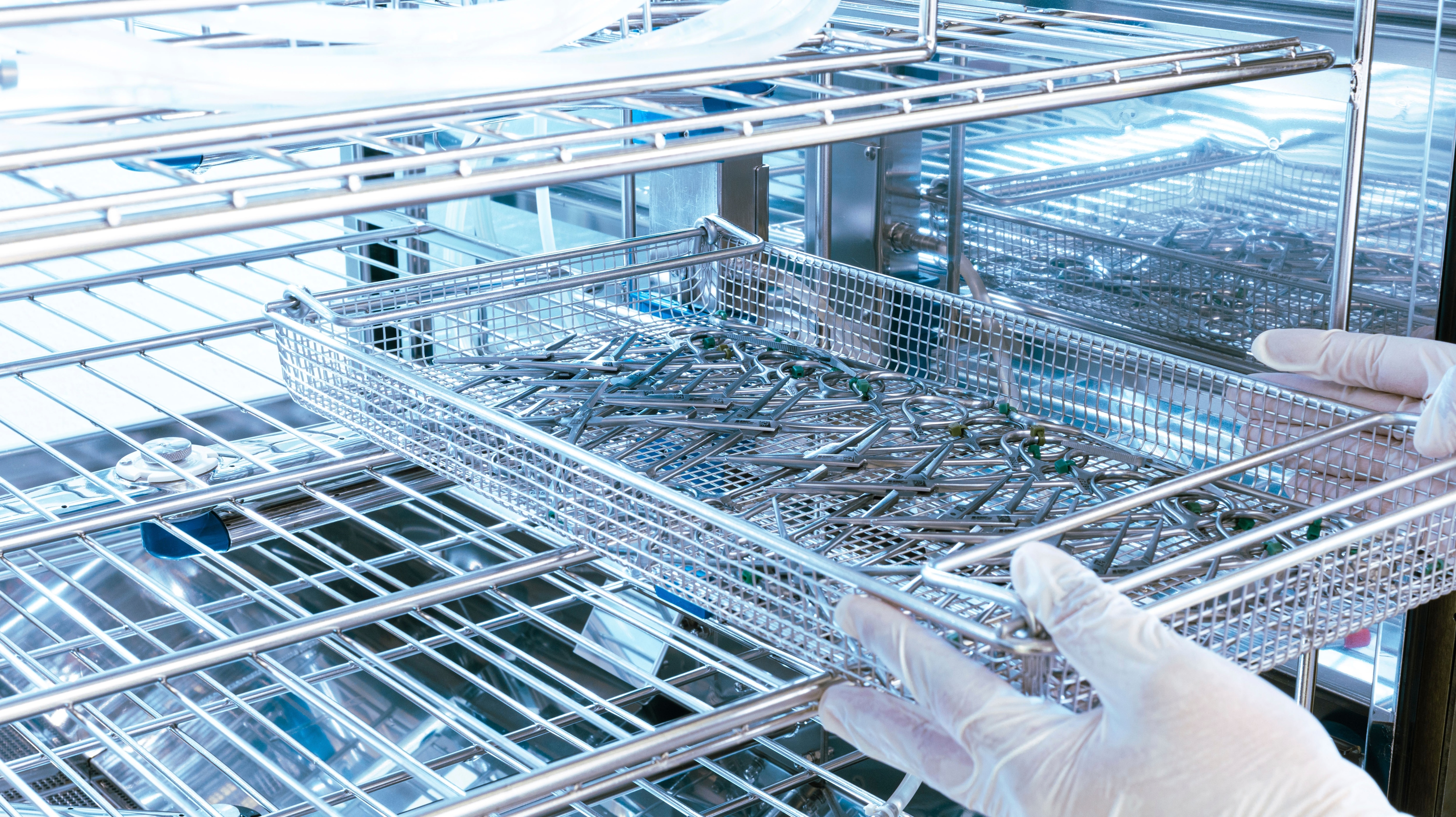
Validation of the cleaning of an instrument type in accordance with FDA requirements (including ANSI/AAMI ST98)
The validation of cleaning processes in accordance with the requirements of the US Food and Drug Administration (FDA), including the ANSI/AAMI ST98 standard, differs from the MDR-compliant procedure in several respects. A key distinguishing feature is the implementation of a preparatory simulated use phase, which comprises at least six complete reprocessing cycles (including cleaning, disinfection, and sterilization, if applicable). This preparation is intended to assess the risk of contamination accumulation due to the effect of high temperatures on residual contamination that remains after a cleaning process.
The simulated use phase includes:
- Contamination: All samples are contaminated with a defined test contaminant that closely resembles actual medical use.
- Cleaning and disinfection: Cleaning takes place after the drying period. In automatic processes (e.g., washer disinfector), this also includes thermal disinfection and drying. In manual processes, disinfection is carried out manually.
- Sterilization: If the reprocessing process includes sterilization (e.g., steam or VH₂O₂), this is also carried out.
The simulated use phase must be performed at least six times.
When evaluating the cleaning performance of an automatic cleaning process (e.g., washer disinfector), the process is interrupted before thermal disinfection in order to avoid any residual contamination that may be present from becoming a distorting factor. In addition, the determination of at least two analytes (components of the test contamination) is expected for the evaluation of the cleaning success. This increases the validity of the validation and reduces the risk of false-negative evaluations.
Test setup and sample concept
A total of five samples of one type of instrument are used to validate the cleaning process:
- Positive control: To ensure the detectability of contamination and to ensure and quantitatively detect a sufficiently high initial contamination (e.g., 10 to 1000 times the acceptance criterion)
- Negative control: To check and quantify possible background signals
- Three test samples: To evaluate the cleaning performance
Baselining and extraction efficiency
Baselining is used to determine the background contamination of the samples (negative control) and the possible influence of potentially interfering substances. These substances can lead to false positive results in the OPA assay when extracted with SDS solution. Therefore, an initial extraction of all samples is performed without prior contamination and the extracts are analyzed using the OPA assay. The extraction efficiency is determined using two (MDR) or three (ANSI/AAMI ST98) samples.
Electrosurgical application
Electrosurgical instruments are used in fields such as surgery, gynecology, urology, and ENT. Examples of typical instrument types include mono- and bipolar scissors and handpieces with electrodes. Electrical current is used to generate and transfer heat to specific areas of tissue. Electrosurgical applications are used for cutting, coagulation (hemostasis), sealing structures, or surface ablation. At temperatures well above 100°C, coagulation or dehydration of the tissue occurs. This leads to tissue adhesion at the contact points (electrodes), which can result in charring at high temperatures. These tissue residues pose a major challenge for cleaning procedures and can only be successfully removed with mechanical assistance, such as brushing. The most realistic possible reproduction/simulation of this contamination is part of the validation process and is carried out, for example, using samples from the intestine, liver, or kidney. This is a requirement of DIN EN ISO 15883-5.

Performing the validation: Three independent runs
Validation is typically performed in three separate test runs. In each run, four of the five samples are deliberately contaminated with a defined test contaminant (e.g., sheep blood with protein and hemoglobin as markers). After a specified drying time, three of the contaminated samples, together with one uncontaminated sample (negative control, see above), are subjected to the defined cleaning process. The fourth contaminated sample is not cleaned and serves as a positive control (see above). The cleaning success is then evaluated by extraction with SDS solution (recovery of residual contamination) and subsequent quantification of the protein content using an OPA assay. The OPA method allows sensitive and specific detection of protein-based residues.
Additional evaluation of hemoglobin
According to MDR requirements, determination of residual protein after cleaning is sufficient. For FDA approval, analysis of a second analyte, such as hemoglobin (a component of red blood cells) or TOC (total organic carbon), is expected. Additional determination of hemoglobin content can be particularly helpful when false-positive protein values occur. The detection methods used by SMP for hemoglobin are insensitive to residues of cleaning chemicals (a common cause of false-positive results in the OPA assay) and therefore offer a robust complement to protein determination.
Use of radioactively labeled test contamination
An innovative approach to evaluating cleaning performance is the use of radioactively labeled test contamination. The test contamination is labeled with a radioactive marker (in this case 99mTc), which can be detected using a gamma camera. The method allows imaging documentation of the initial contamination and its distribution, evaluation of individual cleaning steps (e.g., manual pre-cleaning, ultrasonic bath, washer disinfector), and analysis of residual radioactivity and optical assignment after cleaning is complete.
.jpg)
The metastable radioactive isotope 99mTc used decays with a half-life of 6.01 hours and emits gamma radiation with an energy of 140.5 keV. This radiation penetrates the materials of instruments, allowing decaying technetium to be detected even in areas that are difficult to access, such as lumens, joints, or overlapping surfaces without causing damage. The gamma radiation is measured using a special camera that records a two-dimensional projection of the radiation intensity. This two-dimensional representation can be superimposed, for example, in a false-color display with design drawings or photos of the instruments, thus localizing the radioactive technetium and thus the test contamination or, after cleaning, its residues. This method is particularly valuable in the development phase of new instruments with complex geometry and can also be applied to situations such as the gas processor of an anesthesia machine.
Thermal disinfection
Thermal disinfection in the washer-disinfector is validated in accordance with DIN EN ISO 15883-1 and -2, taking into account the A₀ value. Temperature measurements are taken on or in the samples in independent runs. These are evaluated in accordance with the standard in order to document that the specified temperatures have been reached and thus to prove the effectiveness of the disinfection.
Drying
The final drying is evaluated visually. After the cleaning process, the instruments are removed from the washer disinfector and checked for residual moisture by tapping or blowing through them.
Documentation: Protocol and report
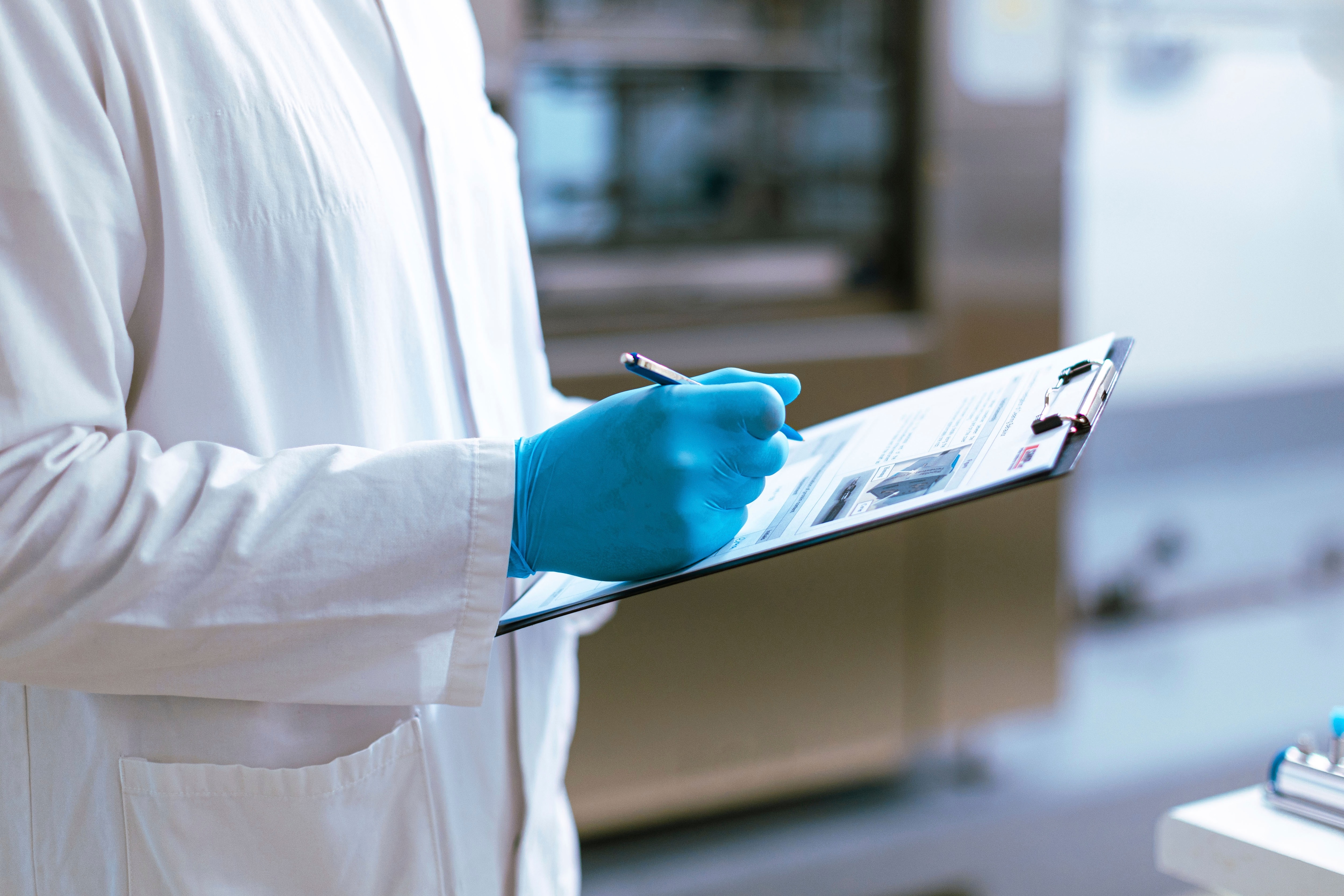
Before the tests begin, a detailed protocol is drawn up together with the client, describing the types of instruments to be tested, the composition of the test contamination, and the procedure for simulated use and cleaning. The acceptance criteria for evaluating the cleaning success are also defined. The final report documents the test results and all relevant environmental conditions, chemicals used, auxiliary materials, and process data for the equipment used. The cleaning success is evaluated in comparison with the defined acceptance criteria and forms the basis for the regulatory classification of the cleaning process.
100_WP001_Reinigungsvalidierung_en_20251031