Cleaning Validation of Surgical Instruments
Cleaning validation demonstrates that a defined process verifiably achieves the requiered cleaning performance for surgical instruments and can be documented in a manner acceptable to regulatory authorities. For medical device manufacturers, the focus is on market authorization and, consequently, on which cleaning validation for surgical instruments can be included in the technical documentation permanently.
In this context, cleaning validation of surgical instruments means testing a defined cleaning process under realworld conditions, evaluating it using metrological methods, and documenting it in accordance with standards. The goal is to provide evidence that considers clinical hygiene risks and regulatory requirements of the MDR, ISO standards, and, in the manufacturing sector, the FDA.
Cleaning validation of surgical instruments raises different questions regarding study design, test specimens, reference to standards, and the level of detail in reporting in all four segments: medical device manufacturers, healthcare facilities, validation companies, and manufacturers of reprocessing equipment. SMP operates at this intersection as a specialized partner for the cleaning validation of surgical instruments. The Tübingen team combines accredited laboratory analysis, test specimen production, process validation, and technical expertise. Those seeking to establish a technically sound cleaning validation process for surgical instruments require a well-thought-out test concept—not just a buzzword. This concept logically integrates instrument design, clinical use, test soiling, reprocessing instructions, analysis, and reporting.
Methodologically sound cleaning validation of surgical instruments accomplishes more than just reducing hygiene risks. It establishes a solid body of evidence for audits, regulatory inquiries, and Notified Bodies; supports risk management, technical documentation, and RUMED (reprocesing unit for medical devices) quality management; and facilitates the control of reprocessing processes across audits, process adjustments, and requalifications.
Early coordination helps ensure that test designs are set up in a manner that complies with regulations from the very beginning. Please use the SMP GmbH contact form for this purpose.
What a Cleaning Validation Protocol for Surgical Instruments Must Include
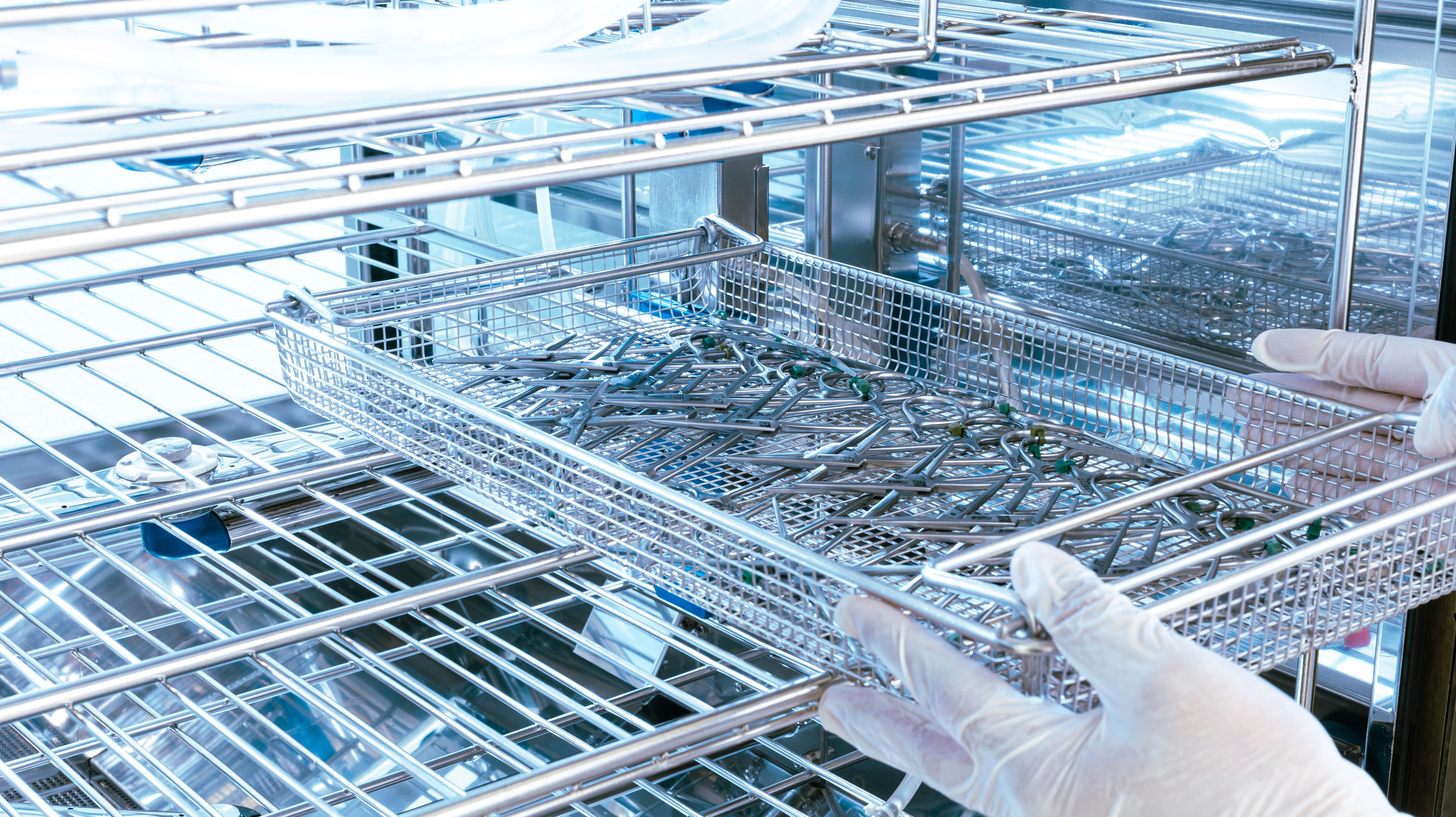
Cleaning validation of surgical instruments provides key evidence that a defined cleaning process reliably removes clinically relevant residues as described in standards. It does not determine whether an instrument appears clean to the naked eye. Rather, it demonstrates that a defined cleaning process reduces residues to levels that meet established acceptance criteria. This includes the sampling strategy, worst-case selection, contamination, drying time, cleaning procedure, extraction, and analytical evaluation based on these criteria.
A blanket statement regarding reprocessing is insufficient for reusable surgical instruments. Joints, lumens, grooves, isolated surfaces, and overlaps affect cleanability. Electrosurgical instruments have additional testing requirements because coagulated or carbonized tissue adheres differently than fresh organic residues.
Cleaning validation of surgical instruments translates this reality into a testable study design.
Manufacturers, healthcare facilities, and validation companies: differing objectives in the validation of surgical instrument cleaning
The specifics of cleaning validation depend heavily on who is conducting it. To set up projects efficiently, take this segment-based approach into account from the beginning.
Although the term "validation" sounds similar across all segments, technically, it refers to different tasks. This distinction helps prevent unrealistic expectations.
Target Audience for Validation | Scope of Cleaning Validation for Surgical Instruments | Typical Validation Documentation | Relevant SMP Area |
|---|---|---|---|
Medical device manufacturers—validate the cleaning process for surgical instruments for market authorization | Processing process for a medical device for market authorization | Validated cleaning of surgical instruments, disinfection, and sterilization, including residual moisture determination and robust reprocessing instructions | |
Healthcare Facilities – validate the reprocessing process for surgical instruments at their own facility | Reprocessing process at their own facility | On-site validation and requalification | |
Validation companies – use test specimens and laboratory analysis for cleaning validation of surgical instruments in client projects | Test specimens, laboratory testing, and evaluation for client projects | Residual protein determination, test specimen sets, laboratory analysis | |
Manufacturers of reprocessing equipment—with a focus on type testing | Performance of reprocessing devices, sterilizers, or process chemicals | Type testing in accordance with relevant guidelines (e.g. DIN EN ISO 15883) and related tests |
The following applies to the healthcare facility segment: The reprocessing process is validated, not the device itself. A reprocessing device (washer disinfector) provides process parameters, measured values, and batch data, all of which are evaluated as part of cleaning validation. Validation assesses the reproducibility of the process with the appropriate load, process chemicals, temperature control, water quality, instrument geometry, and operating instructions.
Standards provide the framework; the test design ensures the validity of the results
DIN EN ISO 17664 specifies the information that manufacturers must provide about reprocessing medical devices. AAMI ST98 focuses on the development and validation requirements for cleaning medical devices. DIN EN ISO 15883 addresses reprocessing devices (WD) and their performance requirements. DIN EN ISO 17665 pertains to moist-heat sterilization, and ISO 11607 covers sterile barrier systems. Medical device manufacturers use DIN EN ISO 17664 and AAMI ST98 to incorporate cleaning validation into the reprocessing instructions and technical documentation of surgical instruments. Healthcare facilities follow DIN EN ISO 15883, as well as country-specific guidelines that clarify this standard regarding the validation of automated reprocessing processes.
These standards serve as a framework for developing specific test plans, worst-case scenarios, and acceptance criteria for cleaning surgical instruments. It is crucial that the selected cleaning process, in conjunction with the washer disinfector, process chemistry, and instrument geometry, comply with the standards while remaining practical.
The validity of cleaning validation of surgical instruments in accordance with DIN EN ISO 15883 and DIN EN ISO 17664 derives from correctly selecting test samples, controls, and acceptance criteria that are traceable in the test design, especially when integrating cleaning validation of surgical instruments into the WD process in compliance with standards.
SMP addresses such issues in the area of cleaning process validation for medical devices. The focus is on structured testing approaches for MDR- and FDA-oriented requirements.
Cleaning Validation of Surgical Instruments for Medical Device Manufacturers
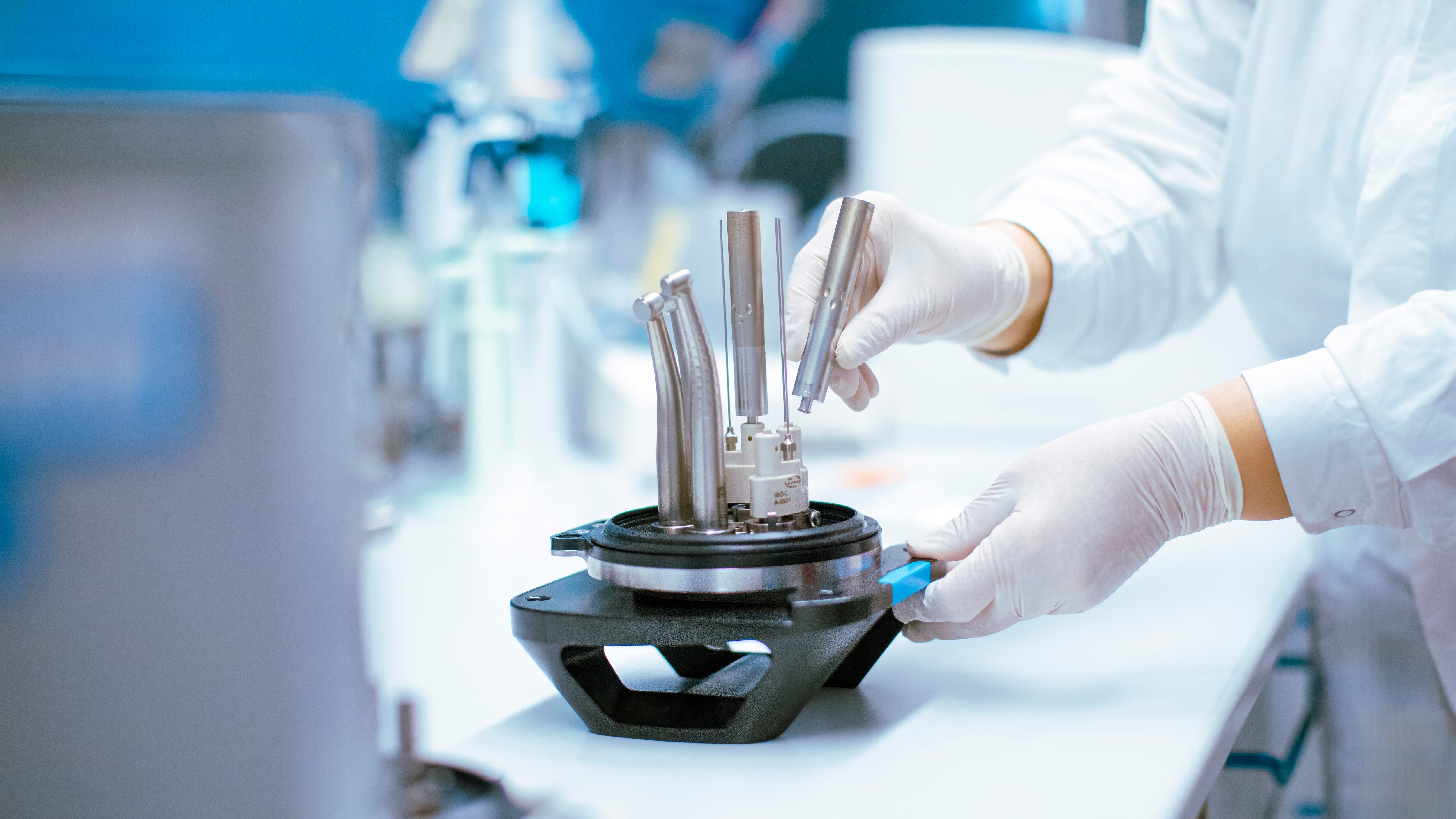
For medical device manufacturers, the cleaning validation of surgical instruments determines which reprocessing instructions and which cleaning process can be supported by robust data. The answer depends on the product.
Typical categories in cleaning validations for these manufacturers include solid standard instruments without lumens; articulated instruments with detents and overlaps; long-lumen instruments with critical internal geometry; and electrosurgical instruments with insulated surfaces and thermally stressed tips. Depending on the category, the contamination strategy, extraction, and acceptance limits differ significantly.
The test plan specifies instrument types, the number of samples, controls, test soiling, the simulated use phase, drying conditions, cleaning steps, and analytical endpoints. A negative control reveals background signals. A positive control confirms the detectability of contamination. Test samples demonstrate the cleaning performance of the defined process.
For complex geometries, the radionuclide method provides additional information during the manufacturing process. It reveals residues in hard-to-reach areas such as lumens, joints, and overlapping surfaces. This method is appropriate for development and validation projects in which general analytical testing alone cannot locate design weaknesses. When a manufacturer changes the design of a long-lumen surgical instrument, the validity of the existing cleaning validation protocol must be reevaluated. In such cases, the test protocol may need to be adapted to the new geometry.
If your development department wants to ensure the cleanability of surgical instruments early in the design process, it would be wise to look into the research and development efforts at SMP GmbH. The white paper*Validation of Cleaning Processes for Medical Devices* explains the radionuclide method in detail.
Cleaning Validation and Requalification at the Healthcare Facilities: SMP Inspects the Reprocessing Process On-Site
In an operational context, the focus shifts: Here, the validated process in the real-world environment is what matters. In medical device reprocessing units (RUMED), SMP examines the entire proces : pretreatment, manual steps, mechanical cleaning, disinfection, drying, packaging, sterilization, and documentation.
This includes loading patterns, process parameters, measurement points, test specimens, residual protein determination, A₀ value assessment, and reporting.
If a hospital changes its cleaning chemistry or an ENT department alters its loading pattern, the original cleaning validation for surgical instruments must be reevaluated. If necessary, the cleaning validation will require requalification.
In RUMED, quality is rarely reflected in a single value. Rather, it is evident throughout the entire chain, including proper preparation, appropriate baskets, unobstructed rinse paths, adequate drying, traceable release, and an intact sterilization barrier system. A weak step in the process can call an otherwise stable process into question.
For healthcare facilities, the focus is on both patient safety and audit and legal compliance: Robust cleaning validation of surgical instruments in the RUMED reduces areas of concern during inspections, supports hygiene management, and provides a traceable basis for decision-making when adjusting WD programs or process chemistry.
For healthcare facilities with complex reprocessing workflows, SMP GmbH offers cleaning validation and requalification of reprocessing processes through ProVal - validating your reprocessing processes | SMP GmbH.
Why measuring residual protein on surgical instruments alone does not answer every question regarding the validation of surgical instrument cleaning
First and foremost, validation companies require stable, standardizable processes. Determining residual protein on surgical instruments is a core component of many test protocols in the cleaning validation of surgical instruments. This method is suitable for evaluating organic residues and provides quantifiable results. However, this method alone does not address all relevant issues. Cleaning chemicals, material properties, instrument geometry, and extraction efficiency all influence interpretation of the results.
Therefore, a methodologically sound cleaning validation of surgical instruments always considers the measurement method within its context. For example, it clarifies: What residues can be expected during clinical use? How does the extraction solution reach critical areas? Do materials or chemicals interfere with the assay? Is a second analyte, such as hemoglobin, required?
SMP GmbH provides test specimens, pre-assembled test specimen sets, sample tracking forms, adapters, training videos, transport equipment, and analytical services. This reduces the margin for interpretation in recurring tests and facilitates comparisons between projects.
Sampling, transport, analysis, and reporting must be consistently coordinated to establish a stable data set. Information on laboratory structure, accreditation, and quality standards can be found in the Quality Management section of the SMP GmbH website.
Common Mistakes in the Cleaning Validation of Surgical Instruments
Many projects fail not because of the analysis, but because of errors in the study design. Thorough preparatory work pays off because later corrections are costly and make reports vulnerable to technical criticism.
- Unclear product families: Cleaning validation for surgical instruments is scientifically open to criticism if the worst case instrument does not represent the most critical geometry of the product family.
- Unrealistic application simulation: Test soiling that does not correspond to clinical reality significantly weakens the results' validity . This is immediately apparent during audits.
- Untested pre-cleaning: Although manual steps are listed in the instructions, but their reproducibility remains unclear.
- Incorrect timing of process termination: Thermal steps can fix residues in place and skew the evaluation.
- Insufficient reporting detail: Reports on the cleaning validation of surgical instruments must transparently document the sampling logic, acceptance criteria, and handling of deviations. Otherwise, they lose their persuasive power.
Good validation reports for the cleaning validation of surgical instruments establish a clear chain of evidence from the product family to the measurement result. Every decision has a rationale, every value has a context, and every deviation is noted. This clarity increases acceptance among regulatory affairs teams, RUMED management, auditors, and Notified Bodies.
Here's How a Robust Validation Project Is Conducted

The validation of surgical instrument cleaning is most effective when it is not scheduled as the final test step. While the process varies depending on the segment, product, and process, the basic structure remains similar.
- Project Definition: Define the target market, standards, product family, and existing reprocessing instructions.
- Worst Case Selection: Evaluate critical geometries, materials, surfaces, and application scenarios.
- Create a test plan (protocol): Define the number of samples, controls, test soiling, drying time, process parameters, and acceptance criteria.
- Execution: Perform contamination, simulated use phases (if applicable), cleaning, process termination, extraction, and analysis in accordance with the protocol.
- Evaluation: Check results against criteria, classify deviations technically, and ensure data integrity.
- Report: Document the method, results, raw data sources, evaluation, and conclusions transparently.
Supplementary documents and white papers are available in the SMP GmbH download area to assist with technical preparation. For industry-specific guidance, the “Industries and Target Groups” page on the SMP GmbH website provides a quick overview.
When to Integrate SMP Early
The more complex the instrument, the sooner it makes sense to seek an outside expert’s perspective. This applies to new developments, design changes, new process chemistry, modified WD programs, new sterilization methods, or follow-up questions from audits. Although a rigorous test article and sample concept increases the effort required at the start of the cleaning validation of surgical instruments but reduces subsequent inquiries from auditors and Notified Bodies.
Since 2000, SMP GmbH has been working on validation, requalification, test specimens, and laboratory analysis for medical devices and reprocessing processes. You can find more information about the company under About SMP GmbH.
Frequently Asked Questions About the Cleaning Validation of Surgical Instruments
What is cleaning validation?
Cleaning validation of surgical instruments provides data demonstrating that a defined cleaning process reduces residues on medical devices to levels that meet specified acceptance criteria. The focus is on clinically relevant residues, instrument geometry, process parameters, extraction, and analysis.
How is a validation conducted?
Validation begins with clarifying objectives, selecting the worst-case scenario, and developing a test plan (protocol). This is followed by defined contamination, drying, cleaning, extraction, analytical evaluation, and reporting. SMP validates the reprocessing process on-site for healthcare facilities. For manufacturers, cleaning validation of surgical instruments relates to reprocessing instructions and technical documentation reports.
Which standards are relevant for the cleaning validation of surgical instruments?
For medical device manufacturers, the most important ones are DIN EN ISO 17664, AAMI ST98, DIN EN ISO 15883, and DIN EN ISO 17665. Within the RUMED, the focus is on DIN EN ISO 15883 and its more specific country-specific validation guidelines. Healthcare facilities use normative requirements as part of their validated reprocessing processes.
Why is a visual inspection after cleaning not sufficient?
A visual inspection after cleaning is not sufficient because it cannot reliably rule out protein-based residual contamination in joints, lumens, and concealed surfaces of surgical instruments. Cleaning validation of surgical instruments supplements the visual assessment of surgical instruments with defined analytical methods and reproducible test conditions.
When is requalification necessary?
In the context of healthcare facilities, requalification means re-evaluating the existing reprocessing process. Triggers include specified intervals, process changes, new loads, changes in process chemistry, maintenance interventions, or abnormal routine test results.
What role do test specimens play in the cleaning validation of surgical instruments?
Test specimens simulate critical geometries and loading scenarios and serve as standardized carriers for test contaminants. They enable reproducible contamination, defined positioning within the washer-disinfector, reliable residual protein determination, and comparable results across different validation projects in the cleaning validation of surgical instruments. Validation companies often use pre-assembled test specimen sets from SMP for this purpose.
When is it appropriate to use the radionuclide method?
The radionuclide method is used in the medical device manufacturing sector when complex instrument geometries render a general analysis insufficient. The method reveals where residues remain in lumens, joints, and overlapping surfaces. It also helps development departments identify cleaning-critical areas early in the design process.
How do test specimens differ from original instruments in cleaning validation?
Test specimens serve as standardized carriers for test contaminants and defined geometries, while actual instruments represent the real product family. In many projects, both are used: actual instruments demonstrate cleanability and test specimens enable reproducible comparisons of the washer-disinfector process's cleaning performance.