Cleaning Validation for the Highest Hygiene Standards in Medical Technology
Thorough cleaning validation forms the basis for stable reprocessing processes and safe medical devices in everyday clinical practice. SMP, a specialist in testing and validation services, supports healthcare facilities, medical practices, and reprocessing units with on-site sampling, validated testing methods, and accredited laboratory methods, ensuring you receive robust evidence of cleaning for your processes.
What is cleaning validation in the context of process validation for the reprocessing of medical devices?
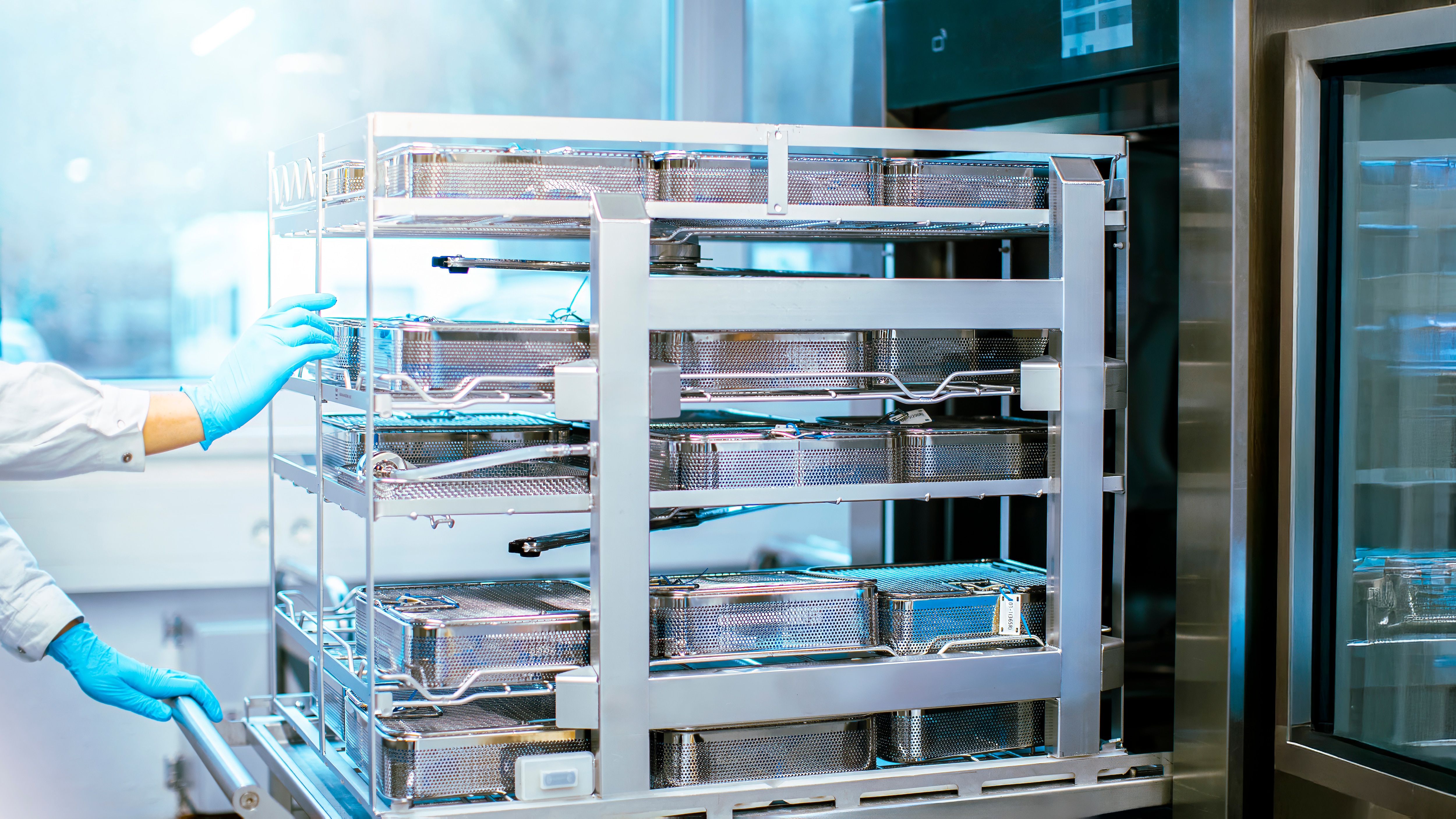
Cleaning validation refers to the systematic demonstration of the cleaning effectiveness of a defined process. The focus is on demonstrating that residues from medical use (such as proteins, blood, and biofilms) and reprocessing (such as cleaning agents or other process chemicals) are reproducibly removed under specified conditions. This cleaning validation complements your hygiene management, quality management, and healthcare facility responsibilities in the context of medical device reprocessing.
For reusable medical devices, this means: You demonstrate to regulatory authorities and internal auditors that the manufacturer’s reprocessing instructions (for example, in accordance with DIN EN ISO 17664) are implemented at your facility using a scientifically sound and practically validated cleaning strategy.
Why Healthcare Facilities Have Cleaning Processes Validated
Hospitals, medical practices, outpatient surgical centers, and external reprocessing service providers are subject to stringent hygienic, regulatory, and economic requirements. KRINKO/BfArM recommendations, the Medical Device Operator Ordinance, regulatory requirements, and recognized technical standards such as DIN EN ISO 15883 require traceable and reliable data on the effectiveness of cleaning processes. Added to this are inspections by regulatory authorities, certifications, and internal quality audits.
Professional cleaning validation as part of the validation and requalification process conducted by SMP significantly reduces this complexity. You receive results for comparison with the relevant acceptance criteria, based on reproducible test methods and meaningful measurement data, which we incorporate directly into the validation documentation and thus make available as part of your hygiene concept. This creates transparency for hygiene specialists and users in everyday clinical practice.
Cleaning Validation with SMP – Approach, Methods, and Regulatory Framework
SMP brings together more than two decades of experience in the validation of cleaning, disinfection, and steam sterilization processes. This approach combines regulatory requirements with practical testing methods. It is based on relevant standards and guidelines, regulatory requirements for the hygienic reprocessing of medical devices, and national hygiene guidelines.
Validation of Cleaning Processes in Day-to-Day Operations
Cleaning is a key component of the processing of medical devices during routine operations. SMP supports you with targeted cleaning validation in various application areas:
- Validation of automated cleaning processes in washer disinfectors: Cleaning performance is determined using Crile clamps as test specimens, and cleaning efficacy is assessed by sampling protein residues on clinical used instruments
- Validation of automated cleaning processes in endoscope washers and disinfectors: Cleaning and disinfection performance, as well as overall process performance and effectiveness, are determined using various tubing test specimens
- Validation of automated cleaning processes in washer disinfectors for chemo-thermal processes for temperature-sensitive items such as hospital beds and bedside tables
- Validation of automated cleaning processes in washer disinfectors for dental transmission instruments: Cleaning performance is determined using dental test specimens (sleeves and cannulas), and by sampling protein residues on clinical used instruments
- Routine inspections of robotic instruments (e.g., from manufacturers Intuitive Surgical and Microport)
- Routine inspection of manually reprocessed medical devices
- Requalification following changes to load configuration, cleaning chemicals, equipment, process parameters, or the time interval
For healthcare facilities and reprocessing service providers, SMP’s validation department offers specialized services for ProVal - validating your reprocessing processes | SMP GmbH, sterilization processes, processes in container and cart washers, packaging processes using sealers, and storage in endoscope storage cabinets. Medical device manufacturers can find in-depth information on industry-specific solutions on the page smpgmbh.com/en/validation-of-cleaning-processes-for-medical-devices.
Tailored solutions for hospitals, medical practices, and medical device reprocessing service providers
Hygiene specialists, CSSD managers, quality managers, and practice managers expect streamlined, standards-compliant, and audit-ready processes. That is why SMP develops customized validation concepts that can be integrated into existing workflows. At the same time, accredited testing procedures in accordance with DIN EN ISO/IEC 17025 ensure that laboratory results are accepted by regulatory authorities, auditors, and customers.
Healthcare facilities and external reprocessing service providers use SMP's routine inspections as part of their quality assurance programs. On the Your partner for validation equipment | SMP GmbH page, you’ll find a detailed overview of test kits and service packages developed specifically for this sector.
Cleaning Validation and Routine Monitoring
While validation demonstrates the fundamental suitability of a process, routine monitoring is based on random checks and established monitoring protocols. These include, for example, test cycles with test specimens, protein measurements, or visual inspections with documented acceptance criteria.
SMP works with you to develop routine monitoring concepts that meet regulatory requirements while also taking your operational resources into account. Key performance indicators and limit values from the cleaning validation are incorporated into routine monitoring, enabling early detection of process drift.
Frequently Asked Questions About Cleaning Validation
What is cleaning validation?
Cleaning validation is the systematic demonstration that a specified cleaning procedure consistently achieves a sufficient level of cleanliness for medical devices under defined conditions. Guidelines specify representative test specimens and measurable limits for this purpose, and relevant worst case instruments are defined in collaboration with the healthcare facilitiy. Cleaning performance and effectiveness are evaluated through analytical methods such as protein or hemoglobin determination. The result is an audit-ready cleaning verification for reprocessing at the facility.
What exactly is validation?
Validation refers to the documented evidence that a process, procedure, or system is capable of delivering a predefined result. In the context of healthcare facilities, this includes not only cleaning validation but also the validation of disinfection and sterilization processes.
What are routine checks?
Routine checks complement cleaning validation in day-to-day practice. While validation demonstrates the fundamental suitability of a cleaning procedure, routine checks use random sampling and monitoring measures to track performance over time. Typical tools include protein tests, visual inspections with clearly defined criteria, test cycles using test specimens, and trend analyses. The underlying reference values are based on the findings of the initial cleaning validation.
Why are instruments treated with a foaming SDS solution during cleaning validation?
This solution is SDS (an aqueous solution of sodium dodecyl sulfate), a strong anionic surfactant that effectively neutralizes the adhesive strengths (primarily hydrophobic interactions and electrostatic attractions) between proteins and material surfaces. The key mechanism of action is the targeted denaturation of proteins: SDS induces the unfolding of the tertiary and secondary structures, while the primary structure (amino acid sequence) remains intact. This conformational change and the binding of SDS molecules solubilize the proteins and stabilize them in the elution solution. This ensures nearly quantitative and reproducible recovery of the analytes—the fundamental prerequisite for valid laboratory-based quantitative analysis.
The pH of the SDS solution plays a supporting role in this process. Typically, a slightly alkaline pH range is used, as SDS is stable under these conditions and the proteins are well retained in solution. At the same time, this ensures that subsequent protein assays using the OPA and/or BCA methods are not compromised and yield valid results.
In practice (and as described in the German validation guideline MHP_ZS-Supplement-ENG-2017_E-Paper.pdf) a 1% SDS solution is used because this concentration has been established as reliable for protein recovery. A 1% SDS solution is strong enough to reliably denature proteins and effectively detach them from surfaces. Lower concentrations, on the other hand, can result in proteins being only partially detached, leading to low or poorly reproducible measurement results.
At the same time, 1% SDS represents an optimal balance between effectiveness and ease of use. Higher concentrations generally offer no additional benefits but can complicate handling (for example, due to even more intense foaming or undesirable interactions with subsequent laboratory analyses). Furthermore, this concentration is well-suited for use with common detection methods (OPA and BCA assays), provided these have been appropriately validated as laboratory methods. Another important aspect is standardization: Since 1% SDS is frequently used in guidelines and validation protocols, the results are more comparable and reproducible. For these reasons, recommendations and methods for cleaning validation consistently refer to the use of a 1% SDS solution.
How are proteins tested during cleaning validation in the laboratory?
To assess cleaning performance as part of cleaning validation for medical devices, established protein analysis methods such as OPA and BCA assays are used. The goal is to reliably detect protein residues and thereby conclusively demonstrate the effectiveness of the entire reprocessing process. The detection of proteins is considered a key quality indicator, as organic residues pose a direct hygiene and infection risk to patients and staff.
In practice, the OPA (o-phthaldialdehyde) method is predominantly used as the primary technique, as it delivers rapid results and can detect even the smallest protein residues with high sensitivity. It is particularly well-suited for detecting minute amounts of protein in the limit range: Through the formation of a fluorescent signal, even minimal residues can be precisely detected. Thus, OPA analysis supports compliance with strict regulatory requirements, enables a finely graded assessment of residual protein content, and allows for an efficient and reliable evaluation of cleaning performance in routine use.
In the event of higher measured values, a cross-check is performed using the BCA method (bicinchoninic acid), a robust standard procedure for the quantitative determination of protein residues. In this process, any present proteins react with a reagent, producing a violet color; the intensity of this color is proportional to the amount of protein and allows for a reliable and practical assessment of cleaning performance. The BCA analysis thus serves to validate the results, as it quantitatively confirms any protein residues that may be present and simultaneously helps identify potential false-positive signals from the OPA measurement.
To further validate the results, a cross-check is performed to test for hemoglobin. Hemoglobin is considered a clear indicator of organic contamination with blood and thus enables a clear assessment of residues relevant to hygiene.
This multi-step analytical approach (consisting of OPA measurement, confirmatory BCA analysis, and supplementary hemoglobin detection) ensures a high degree of reliability and certainty in the evaluation of cleaning processes.